The D7500 is the camera people quietly kept recommending years after it launched, and there is a reason for that. Nikon put a 20.9-megapixel DX sensor and the EXPEED 5 processor into a sealed body that shoots eight frames a second and focuses with 51 points, then priced it under the bodies it borrows from.
If you already own one, most of what follows is about getting more out of it. If you are still deciding, the three limitations further down are the ones that actually matter. Everything here is specific to this camera — no settings copied over from a different body.
What the D7500 is good at
Three numbers explain most of this camera's character.
- ISO 51,200, and that is the native ceiling. Not the expanded figure. For a DX body that is unusually high, and it is why the D7500 keeps working in light where its class normally stops.
- Eight frames per second. Fast enough for club sport, kids, and most birds in flight, from a body that costs a fraction of what that speed used to.
- 100% viewfinder coverage. What you framed is what you get. On cheaper bodies you are working with about 95% and cropping the surprise out afterwards.
Add a 3.2-inch tilting touchscreen, weather sealing, and 950 shots per charge, and it handles a full day outdoors without much negotiation.
Best settings, by situation
These are starting points calibrated to this camera's actual range. Adjust for your lens, your light, and how fast your subject is moving.
Night and low light
Mode A · f/1.8–2.8 · ISO 3200–6400 · Auto ISO cap 12,800 · minimum shutter 1/60 · white balance auto
Use Auto ISO with the maximum set to 12,800 rather than the full 51,200. The sensor will go there, but you are trading a lot of detail for the last two stops. Keep the ceiling in reserve for shots you would otherwise lose entirely.
Concerts and stage light
Metering: highlight-weighted · Mode A · Auto ISO, max 12,800
This is the setting most D7500 owners never turn on. Highlight-weighted metering exposes to protect the brightest part of the frame, which is exactly the problem a spotlit face on a dark stage creates. Matrix metering will blow the face out. This will not.
Portraits
Mode A · f/1.8–2.8 · ISO 100–400 · AF-S, single point · matrix metering
Put the single point on the near eye. With 15 cross-type points clustered centrally, the middle of the 51-point array is the most reliable part of the frame to focus with — recompose from there rather than reaching for an outer point.
Landscapes
Mode A · f/8–f/11 · ISO 100 · focus in live view · 2-second timer
On a tripod, focus in live view on the touchscreen: tap the point, magnify, confirm. It is more accurate than the viewfinder for static scenes, and the tilting screen means you are not lying in the mud to check it.
Sport and wildlife
Mode S or M · 1/1000 s or faster · Auto ISO, max 6400 · AF-C · continuous high, 8 fps
Two things to plan for. The shutter goes to 1/8000, so you can stay wide open in bright light without a filter. And with only one card slot, the buffer empties as fast as that single card can write — a slow card is what turns eight frames a second into three.
Fill flash in bright sun
Mode M · shutter no faster than 1/250 · f/4–5.6 · ISO 100
Flash sync tops out at 1/250. Go past it and you get a black band across the frame. If you need a wider aperture in full sun, that is what a neutral density filter is for — not a faster shutter.
Three things to know before you buy
These are real limitations, verified, and each one matters to a different photographer.
One card slot
The D7500 records to a single SD card. If you shoot weddings, events, or anything else you cannot reshoot, the absence of a second card as live backup is a genuine professional risk. For everyone else it is a non-issue, and this is the clearest place Nikon saved money.
4K video carries an extra 1.5x crop
4K UHD at 30p is real, but it is taken from a cropped area of an already-cropped DX sensor — roughly a 2.25x field of view compared with full frame. Your 18mm wide-angle frames like a 40mm. If you shoot video wide, budget for a wider lens. Full HD uses the full sensor width and is unaffected.
No battery grip
Unlike the D7200 before it, the D7500 has no vertical grip option. Portrait shooters who work with a grip should know this before ordering, and the 950-shot battery is the compensation.
Who the D7500 is for
- Enthusiasts moving up from an entry DSLR — the single biggest step is the 8 fps burst and the 51-point autofocus.
- Wildlife and sport shooters on a budget — the DX crop extends your reach and the burst keeps up.
- Travel and outdoor photographers — sealed, 950 shots, one body and two lenses covers a trip.
- Not for event professionals who need dual-slot redundancy, or video-led shooters who need wide 4K.
Carrying it all day
The D7500 weighs 640 g as a bare body and 720 g once a battery and a card are in it. That is not heavy on its own. It becomes heavy the moment a fast zoom goes on the front, and then it stays on your shoulder for as long as you are out — 950 frames of battery means the camera will outlast you before it outlasts itself.
That part we do know something about. A wide, padded shoulder pad spreads the load instead of concentrating it on one point, which is the difference between a camera you carry and one your back remembers the next morning. That is the whole idea behind the HiiGuy strap — the one product we make, and the reason this site exists.
One thing worth clearing up, because it confuses people: our strap comes in 32" and 44", and the longer size is not for bigger cameras. Both lengths are the same strap with the same clips and the same safety tether. The XXL is simply longer, for photographers who are tall or broad and find that every standard strap rides too high. It is a measurement of you, not of your camera.
Nikon D7500 — key specifications
| Sensor | 20.9 MP DX CMOS, 23.5 × 15.6 mm |
| Processor | EXPEED 5 |
| ISO | 100–51,200 native |
| Burst | 8 fps |
| Autofocus | 51 points, 15 cross-type (Multi-CAM 3500FX II) |
| Shutter | 30 s – 1/8000 s, flash sync 1/250 s |
| Video | 4K UHD 30p (extra 1.5x crop) |
| Viewfinder | Optical pentaprism, 100% coverage |
| Monitor | 3.2 in tilting touchscreen, 922k dots |
| Storage | 1 × SD / SDHC / SDXC |
| Battery | 950 shots (CIPA) |
| Weight | 640 g body only, 720 g with battery and card |
| Weather sealing | Yes |
| Announced | April 2017 |
Specifications verified against Nikon's published data on 7 September 2026.
The full comparison table, an honest read on who this body suits and who should look elsewhere, and Nikon's own video are all on the Nikon D7500 page.
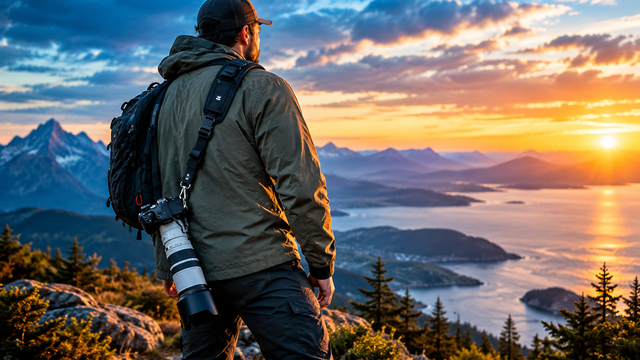
Carrying a heavy lens all day

That is a HiiGuy strap doing the job it was built for. The weight is not hanging off a thin band — it is spread across a padded shoulder pad, which is the difference between a setup you carry for an hour and one you carry all day.
Two lengths, 32" and 44". Same strap, same quick-release clips, same safety tether in both. The XXL is simply longer, for photographers who are tall or broad and find every standard strap rides too high — it is a measurement of you, not of your camera. See it on Amazon, backed by a 3-year HiiGuy warranty.
If you are also considering
Almost nobody is choosing between this camera and nothing. These are the bodies it actually gets compared against.
- Nikon D3500 — the lighter, cheaper Nikon most people start on
- Nikon D850 — what you move to when 20.9 megapixels stops being enough
- Canon EOS 90D — the Canon this competes with directly, at 32.5 megapixels
Every camera we cover is in the camera guides, and the specifications above can be checked against the independent database at DPReview.
Where to buy it
We do not sell cameras. If the D7500 is the right body for how you shoot, check the current price on Amazon. Prices move often enough that publishing one here would only ever be wrong.
As an Amazon Associate, HiiGuy earns from qualifying purchases. The camera link above is an affiliate link; the HiiGuy strap is our own product.