Four hours into a day with one body and a long lens, the ache is always on the same side. That is why people start typing "single camera harness" into a search box. Nobody wants a new category of gear. They want the weight somewhere other than where it currently is, and a harness is the only thing on the shelf that looks like it moves it.
Our own Amazon search-term report, for the period ending 12 August 2026, puts that exact phrase at 89 impressions, with "camera harness for photographers" on another 58. The whole harness family came to 254. The two-camera version is written about constantly. The one-camera version is the bigger search and almost nothing answers it honestly, usually because the answer is being written by someone selling one or the other.
We sell a strap. So this is the comparison written straight, including the part where the harness wins.
What a single camera harness actually changes
One thing, and everything else follows from it: the load path.
A single camera harness goes over both shoulders. The better ones add a plate on the chest and a second one across the back, and a published hiking-carry guide describes that design in exactly those terms, a chest plate and a back plate to spread the weight evenly over the body. The camera then mounts at the front of your chest, usually on a twist-lock or a clip, rather than hanging off a band.
Two things change at once. The weight is now shared between two shoulders instead of loading one, and the camera is held against your torso instead of dangling from it. The second one is the bigger deal and the one people underrate. A hanging camera is a pendulum, and a pendulum on a steep path finds every rock, every gate and every doorframe.
What a strap is doing instead
A strap worn across the body puts the pad on one shoulder and the camera at the opposite hip. The load goes down one side of you, and the camera swings in an arc whose size depends entirely on how tightly you have set the length.
That sounds worse than it is, because the swing is also the feature. The camera is loose, so it comes up to your eye in one motion with no release to find. You can shoot one-handed. You can hand the camera to someone else without taking anything off your body. Nothing about your shoulders or your chest is occupied when you are not shooting.
A harness buys you stability and pays for it in access. A strap buys you access and pays for it in swing. There is no version of this where one of them is simply better, which is why the question "harness or strap" has no answer until you say what the day looks like.
Three cases where the harness genuinely wins
Steep ground with both hands busy. Scrambling, ladders, ice, anything where you need both hands and cannot have a camera arriving at your ribs on every move. Clamped to your chest, the body goes where your torso goes and stops being a separate object with opinions.
Heavy glass on a long day. One shoulder taking four or five pounds for eight hours is a real complaint, not a soft one. Splitting it across both shoulders is the only fix that does not involve carrying less. If the long lens is the problem rather than the day, we went through the rest of those options in carrying a heavy telephoto without wrecking your shoulder.
Working with a backpack that is already loaded. A harness and a pack share the shoulder straps and compete for the same real estate, which sounds like a conflict and sometimes is. But a chest-mounted camera sits in front of a pack's sternum strap without fighting the hip belt, where a crossbody strap has to be threaded around both.
Four cases where the strap is the right answer
These are the ones the harness reviews skip, and they are not edge cases. They are most days.
Tripod work. You are taking the camera off and putting it back every few minutes. A harness turns that into a two-handed operation at chest height with a plate in the way, while a quick release on a strap is one hand and a second.
Anything involving a bag. Every time you want the bag off your back, the harness is in the path. Straps cross under a pack or get unclipped in one motion. We wrote up the backpack version of this in wearing a camera strap with a backpack on.
Getting in and out of a car. It sounds trivial and it is the thing that kills harnesses for people who photograph at more than one location in a day. A chest rig is a garment. You put it on and take it off. A strap goes over your head at the car door and that is the whole procedure.
Layers and weather. A harness sits on top of your outer layer, so a jacket going on or coming off means the whole rig comes off first. In changeable weather this happens more often than you think.
The capacity number is not the question
Carry hardware is sold on rated weight, and the numbers are absurd on purpose. That same hiking guide quotes a well-known camera clip as holding up to 200 pounds of equipment.
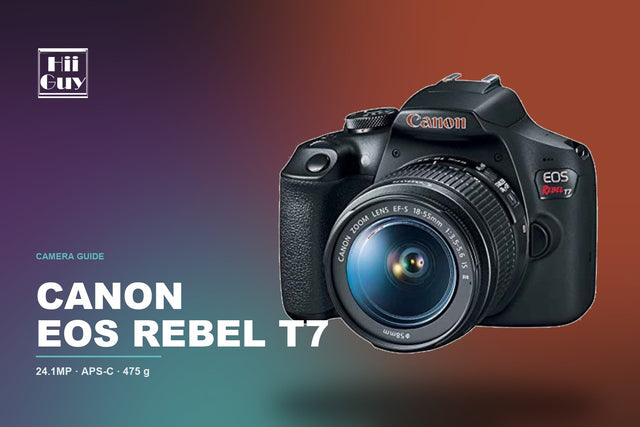
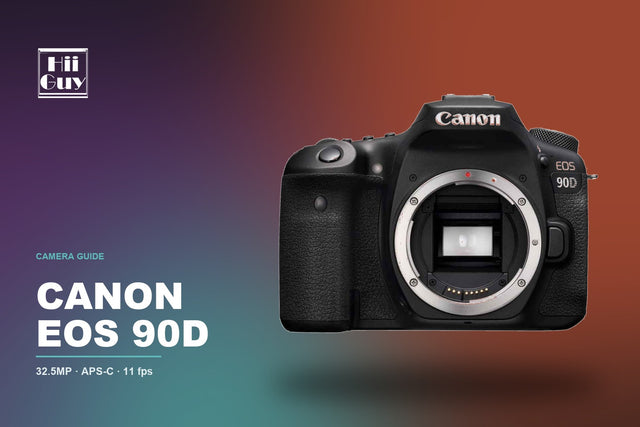
Now the other half of the arithmetic. A mid-range crop DSLR with its battery and card in it runs about 1.6 pounds according to the published specification, and a long zoom like the 70-400mm sits at 53 ounces, which is another 3.3 pounds. A serious wildlife rig, in other words, is under five pounds. Nothing in this category is anywhere near its rated limit.
So stop comparing capacities. The questions that actually decide it are where the load sits on your body, what the camera is attached by, and how fast you can get it to your eye. A rating of 200 pounds tells you nothing about any of those.
Set a strap up properly before you buy a harness

Most of the discomfort people blame on strap-versus-harness is really a length problem and a width problem. A thin band on a bare shoulder concentrates the whole load into about an inch of skin, and a strap left at its factory length lets the camera hang at knee height, where the swing is at its worst.
The HiiGuy strap is heavy-duty polyester webbing with a wide padded shoulder pad, a stainless steel quick release and a safety tether running alongside as a second path for the load. There are two variations and length is the only difference between them: the Regular adjusts up to 32 inches on the body, the XXL up to 44 inches. If you are tall, broad, or wearing a winter coat, the short one is the reason a crossbody strap feels like it is cutting across your chest. See it on Amazon.
Take the picture above as the test. The pad is on one shoulder, the webbing runs flat across the chest, and the camera sits high enough that his hand falls onto it without reaching. Tightened to that height, a strap stops swinging into things, which was the harness's main argument. If yours hangs lower, shorten it before you spend anything.
So which one
One camera, mixed days, a tripod in the bag, more than one location: the strap, set short. This is most photographers and it is not a compromise answer.
One camera, heavy lens, all day on foot, both hands needed on the ground: the harness, and accept that it will be slower at the car and in the rain.
Two bodies at once is a different problem with a different answer, which we laid out separately in how to carry two cameras without wrecking your shoulders. And if you are still deciding how you want to carry anything at all, the seven ways to carry a camera all day is the wider map this sits inside.
What you should not do is what the forums do, which is to rule out the harness in the first sentence of the question without ever saying what it would have changed. Now you know what it changes. Decide on purpose.