The night before a trip, the camera bag is the thing you pack last and think about least. So you throw in everything. Three lenses, two chargers, a flash you have not used since last year, a tripod "just in case". On day two you are carrying all of it up a hill and shooting everything with one lens.
The fix is not a bigger bag. It is a shorter list. These are the travel camera bag essentials we actually pack, what each one is for, and the handful of things that stay at home. There is a checklist at the end worth saving.
This article contains affiliate links to products sold by other brands on Amazon. If you buy through them, HiiGuy may earn a small commission at no extra cost to you.
Decide what the trip is for before you pack
Every item in the bag should answer one question: what will I actually shoot? A city break is streets, food and people, often indoors in low light. A national park is distance, weather and long days on foot. A family holiday is mostly the family. Write the answer down in one line, and let it veto anything that does not serve it.
It also helps to pack for the day, not the week. You will usually leave the hotel with a smaller kit than you arrived with, so the real question is what goes on your shoulder each morning.
The travel camera bag essentials
One body, and no more than two lenses
A zoom that covers the everyday range does most of the work on a trip. The second lens should do something the first cannot, such as a fast prime for dim restaurants and evenings, or a long zoom for wildlife. If you cannot name the shot a lens is for, it stays home. Your back will notice by the second afternoon.
Batteries, and where they are allowed to travel
Pack at least one spare battery for every day you expect to be away from a charger, plus the charger itself. Then pay attention to where they go. The TSA's published guidance is explicit: spare, uninstalled lithium ion batteries "must be carried in carry-on baggage only." Batteries rated at 100 watt hours or less are allowed in the cabin, and larger ones between 101 and 160 watt hours need airline approval, with a limit of two spares per person. The rating is printed on the battery.
Keep each spare in its own case or small pouch, so the contacts never touch keys, coins or each other. Leave the battery in the camera, too. That is one less spare to track through security.
More memory cards than you think
Two or three smaller cards beat one huge one. If a card fails or gets lost, you lose a day, not the trip. Swap cards each evening and keep the full ones somewhere other than the camera bag, such as a zipped pocket in your jacket or day pack.
A cloth and something for rain
A microfiber cloth weighs almost nothing and saves a lot of smudged sunset frames. For rain, a simple cover or a bag with one built in is enough. A shower cap from the hotel will do in a pinch.
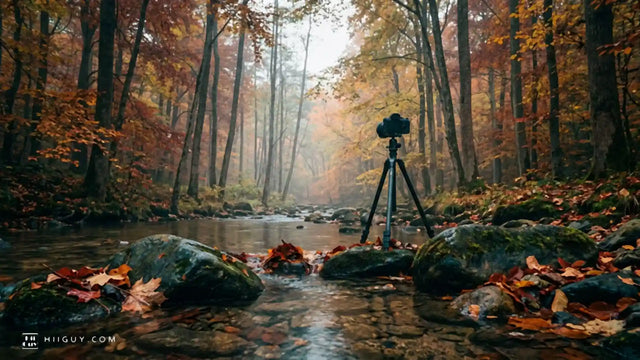
A small tripod, only if you will use it
A full tripod is the most common thing people carry and never unfold. If you want low-light or self-portrait shots, a compact tabletop tripod covers a lot of it. The mini desk tripod in our catalogue extends to 21.6 inches and folds down to 6.5 inches, weighs 1.4 lb, and has a ball head with a quick-release plate. It is sold by another brand on its Amazon listing. Set it on a wall, a car roof or a café table, and you have long exposures without a tripod on your back.
A hand strap for crowds
In a busy market or on a boat, a camera hanging on a long strap can swing into people and railings. A wrist strap keeps it tight in your hand. The paracord hand strap we list is 16 inches long, weighs 1.6 oz, and is sold by another brand through Amazon.
The bag itself: travel with less of one
For most trips, the best travel camera bag is the smallest one that fits the kit above. There are three shapes worth considering.
A camera insert in the bag you already use. This is the most discreet way to travel. The camera lives in a padded box inside your normal backpack, and nobody sees a camera bag. The minimal camera insert organizer in our catalogue is canvas and nylon with padded, repositionable dividers that hold one body and two lenses, and it can also be carried on its own as a sling. It is sold by another brand through its Amazon listing.
A sling bag worn on the chest. Fast access without taking anything off, which matters in places where you shoot on the move. Look for a hidden pocket against your back for a passport and a tripod holder if you bring one. The minimalist sling bag we list has both, with removable dividers for lenses and a flash. It is sold by another brand on Amazon.
A dedicated camera backpack. Only worth it for a heavy kit or long hikes. For a city break it is usually more bag than you need, and it tells everyone on the metro exactly what is inside.
Whichever you choose, check your airline's published carry-on size before you fly. The camera belongs in the cabin with you, never in checked luggage.
Carry the camera, not just the bag

Here is the part most packing lists skip. On a travel day, the camera spends far more time out of the bag than in it. If it lives in the bag, you miss the shot while you unzip. If it hangs around your neck, your neck aches by lunchtime.
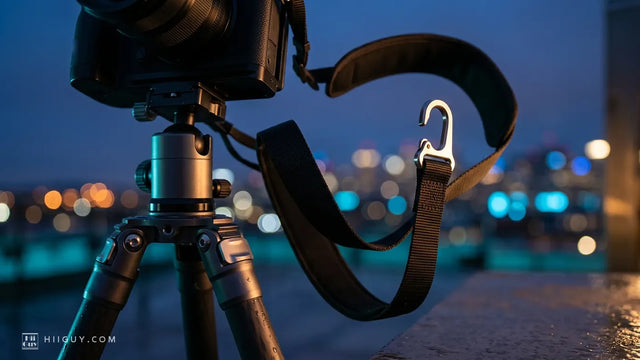
What works is a strap worn across the body, with the camera resting at the hip, like the photograph above from one of our own shoots. Your hand falls onto the camera naturally, and the weight sits on a shoulder instead of your neck. The HiiGuy camera strap is built for exactly that carry, with heavy-duty polyester webbing and a wide padded shoulder pad. A stainless steel quick release lets the camera come off in one movement for the tripod or the bag, and a safety tether sits behind it as a second connection.
It comes as two variations, identical except for length. The Regular adjusts up to 32 inches on the body, and the XXL adjusts up to 44 inches for taller and broader travelers, or for wearing crossbody over a jacket on a cold morning. HiiGuy has made the strap since 2016 and backs it for three full years. For more on how the different carry styles compare, see how to choose the right camera strap for your photography style.
What stays at home
- The third lens. If it was not in your one-line plan, it is weight.
- The big flash. On most trips, a fast lens and a higher ISO do the job.
- The laptop, if you can avoid it. Swapping cards and backing up to a phone or small drive is lighter.
- A second charger. Unless your batteries are different models, one is enough.
- Every filter you own. Pick the one you use, if any.
If you are unsure what settings to use once you are there, our camera settings chart by scenario fits on a phone screen and covers most of what a trip throws at you.
The checklist
- Camera body, battery installed
- Everyday zoom, plus one lens with a clear job
- Spare batteries in carry-on, one per day away from a charger, each in its own case
- Charger and cable
- Two or three memory cards
- Microfiber cloth
- Rain cover
- Compact tripod, only if you will use it
- Crossbody strap, set to length over the jacket you will wear
- Hand strap for crowds
- A bag or insert no bigger than the list above
Pack it the night before, then lift the bag and walk around the room with the camera on your shoulder. If it already feels heavy, take one more thing out. You will not miss it on the trip.