Hour one, the camera feels like nothing. Hour six, it is all you can think about.
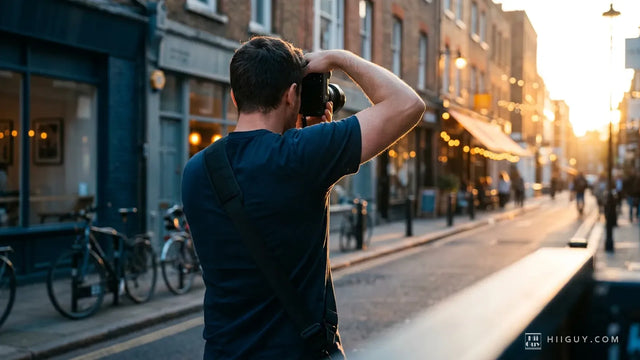
Every photographer finds this out the same way: on a long day, somewhere good, with a strap digging a line across their back. You do not notice the weight when you pick the camera up. You notice it when you would rather leave it in the bag than take one more frame.
So you have a new camera and a lens or two. Before the pictures get good, four things make the difference between a hobby you keep and one that quietly ends up in a cupboard.

1. A better camera strap
We make one thing, so treat this as biased and then check it against your own shoulder.

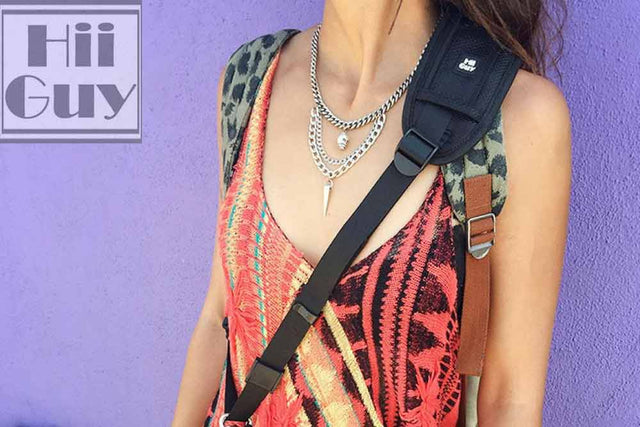
What makes a strap comfortable for a full day is a cushioned shoulder pad. It spreads the camera's weight across your shoulder and back instead of loading it onto one narrow point, and that single difference is what decides whether hour six feels like hour one.
Ours also carries a pocket built into the pad, sized for a spare battery or a memory card — the two things you always want without opening the bag.

Then there is the hardware. Quick-release clips so the strap comes off in a second when the camera goes on a tripod, a safety tether behind the clip, and a screw mount option for bodies without lugs. None of that is on the strap in the box.

One thing worth clearing up, because it confuses people: our strap comes in 32" and 44", and the longer size is not for bigger cameras. Both lengths are the same strap with the same clips and the same tether. The XXL is simply longer, for photographers who are tall or broad and find every standard strap rides too high. It is a measurement of you, not of your camera.
See the HiiGuy strap on Amazon → — backed by a 3-year warranty.
2. A good memory card

The card that came free with the camera is the one that will fail. Buy a card from a name you recognise, and buy for write speed rather than capacity: a slow card is what turns a burst of eight frames a second into three, because the buffer cannot empty fast enough.
Two 64 GB cards beat one 128 GB card. When a card fails — and one eventually will — you lose half a day instead of all of it.
3. Cleaning tools

A rubber air blower, a microfibre cloth and a lens pen. That is the whole kit and it costs less than a filter.
Use the blower first and always — dust dragged across glass by a cloth is how a lens gets scratched. Never use canned air on a sensor: the propellant can leave a residue that a blower will not shift.
4. Editing software

You do not need an expensive program. GIMP is free and does most of what Photoshop does; Darktable is free and does most of what Lightroom does. Start there and pay for something only when you can name the specific thing the free tool will not do.
What matters more than the software is shooting RAW. A JPEG throws away the information you would want back when an exposure is a stop out.
The one that changes your day
Cards, cloths and software all make photographs better. Only one of these four changes how the day feels — whether you are still shooting in hour six or already walking back to the car.
We have been making this one strap for years, and it is still the only thing we make. Two lengths, quick-release clips, a safety tether and a 3-year warranty.